IBI (Impuesto sobre Bienes Inmuebles) is a local property tax administered by the town hall. It accrues annually on 1 January.
The obligation to pay this tax applies to both resident and non-resident property owners, regardless of how they use the property, subject to any applicable exemptions.
The tax calculation is based on the property's cadastral value (valor catastral), with any applicable reductions, local rates and reliefs taken into account. The cadastral value reflects factors such as location, land value, construction and whether the property is urban or rural.
This is not the same as the property's market value. Cadastral values can be revised or updated; they do not automatically change every ten years.
The IBI tax receipt
Each year, the town hall or its collection agency issues an IBI tax bill or receipt. Depending on the municipality, you may receive it by post or access it online.
The receipt contains essential information needed to prepare other property tax returns. Keep a copy even if you pay by direct debit.
Cadastral value: valor catastral
Apart from being the basis for the IBI tax itself, the cadastral value is also used to calculate imputed income for non-resident property tax where applicable.
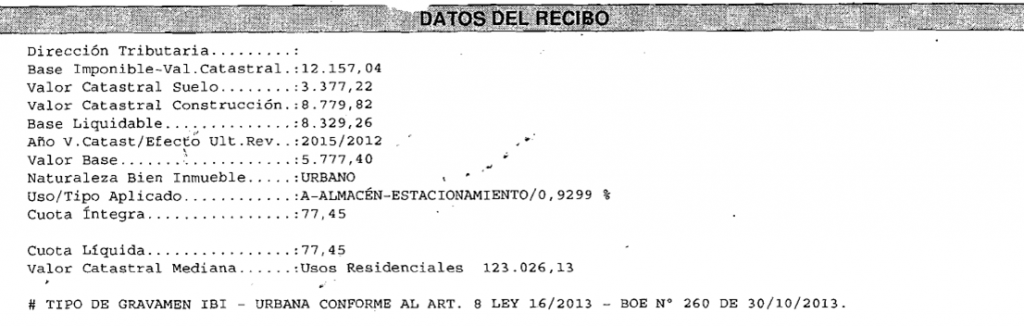
Look for valor catastral on the receipt. Some receipts also show the land value (valor del suelo) and construction value (valor de la construccion) separately.
Cadastral reference: referencia catastral
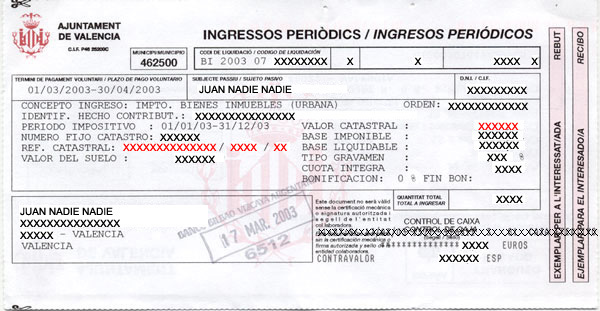
The referencia catastral is the identification code for the property. It may also appear in the property's title deed, particularly in more recent deeds.
This code is needed when filing non-resident property tax and other tax forms.
As IBI is a local tax, receipts do not have a single standard format throughout Spain. The following examples show how the information may be presented.
If you pay IBI by direct debit
If your IBI is paid by direct debit from your bank account, the bank receipt may also contain the relevant information. Check for the cadastral reference and cadastral value; if either is missing, obtain the full receipt from the town hall or its collection agency.
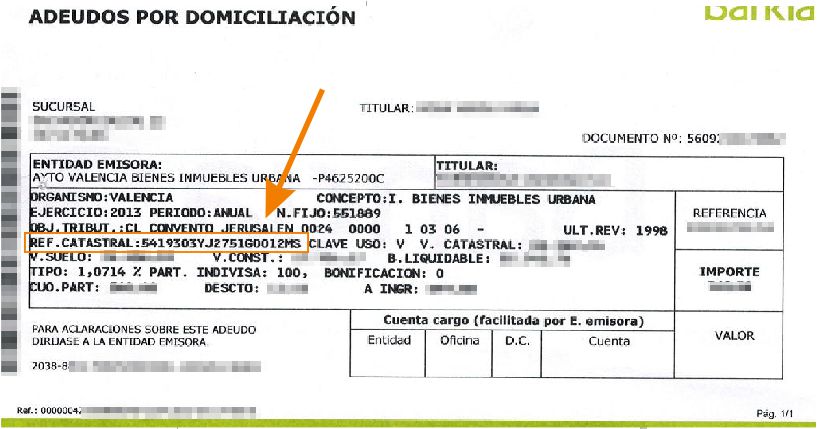
A Google image search for IBI receipts shows the variety of formats used by different municipalities. The layout may vary, but the cadastral value and cadastral reference are the key details to locate.